

Bakuchiol is considered safe for use during pregnancy. Retinol is not. Retinol belongs to the vitamin A derivative family, a class of compounds contraindicated during pregnancy due to established links with fetal developmental harm. Bakuchiol delivers clinically proven retinol-like results on fine lines, firmness, skin tone, and texture, without the pregnancy safety concerns, increased sun sensitivity, or the irritation profile that makes retinol difficult for many people to use.
By Melanie Petschke, APRN, FNP-BC, Co-Founder of Crunchi and Board Certified Family Nurse Practitioner with 10+ years of research on environmental toxin exposure and cosmetic formulation safety.
As a nurse practitioner and cosmetic formulation safety researcher, I have studied ingredient safety during pregnancy closely. It sits at the intersection of clinical health science and formulation chemistry — and it is exactly where Crunchi's standards were built.
Retinol is one of the most well-studied anti-aging actives in skincare. It also belongs to the vitamin A derivative family, which carries a clear contraindication during pregnancy. For anyone who has built a routine around retinol, that guidance can feel like a significant disruption.
The research on bakuchiol changes that. Bakuchiol is not a trend ingredient. It performs, is peer-reviewed, and has placebo-controlled evidence. Unlike retinol, it carries no contraindication for pregnant or breastfeeding individuals.
This article covers the clinical evidence, the safety data, and the full comparison so you can make an informed decision.
What Is Retinol and Why Is It Avoided During Pregnancy?
Retinol is a form of vitamin A. Applied to the skin, it converts to retinoic acid, which accelerates cell turnover, stimulates collagen production, and reduces the appearance of fine lines, uneven tone, and enlarged pores. It is one of dermatology's most evidence-backed topical actives. It is also a compound with a well-established risk profile during pregnancy.
Vitamin A derivatives in high doses are teratogenic, which means capable of causing fetal developmental harm. Oral forms, including isotretinoin (Accutane) and tretinoin, carry FDA Pregnancy Category X designations, indicating that the risk to the fetus outweighs any potential benefit. These drugs are among the most strictly regulated in the U.S. for this reason.
Topical retinol is absorbed at lower rates than oral forms. Population-level studies have not established a definitive causal link between topical retinol use at cosmetic concentrations and birth defects. However, the clinical consensus from the American College of Obstetricians and Gynecologists (ACOG) is consistent: all retinoids and vitamin A derivatives should be avoided during pregnancy and breastfeeding as a precautionary measure.
When the safety of an ingredient has not been confirmed for pregnancy, and a safer alternative with equivalent clinical evidence exists, the safer alternative is the right choice. That is the principle behind Crunchi's formulation decisions, and it is why bakuchiol is in our formulas and retinol is not.
What Is Bakuchiol and What Does the Research Show?
Bakuchiol is a meroterpene phenol derived from the seeds and leaves of the Psoralea corylifolia plant, commonly known as babchi. The plant has been used in Ayurvedic and traditional Chinese skincare remedies for centuries. Bakuchiol as a modern cosmetic ingredient has been the subject of peer-reviewed clinical trials studying its retinol-like performance.
Bakuchiol is not a vitamin A compound. It does not convert to retinoic acid. The mechanism by which it works is distinct from retinol, and that distinction is what makes it appropriate during pregnancy.
The foundational peer-reviewed study on bakuchiol versus retinol was published in the British Journal of Dermatology in 2019. In this randomized, double-blind, 12-week clinical trial, 44 participants used either 0.5% bakuchiol twice daily or 0.5% retinol once daily. Results were measured by clinical grading and digital image analysis.
Key findings: bakuchiol and retinol produced statistically comparable reductions in fine lines and wrinkles, comparable improvements in skin pigmentation and tone, and comparable improvements in skin firmness and plumpness. Bakuchiol participants reported significantly fewer adverse effects, specifically, less scaling and less stinging, than the retinol group.
The researchers concluded that bakuchiol is a clinically suitable alternative to retinol, with equivalent efficacy and a superior tolerability profile. Peer-reviewed. Placebo-controlled. Not a brand study.
The same study confirmed that bakuchiol achieves its results through a distinct non-retinoid pathway. It does not bind retinoid receptors the way retinoic acid does. That mechanistic difference is what allows bakuchiol to deliver comparable visible results without retinol's safety and irritation profile.
How Do Bakuchiol and Retinol Compare?
The table below reflects peer-reviewed clinical data alongside Crunchi's formulation position. Retinol is a Crunchi Banished Ingredient. Bakuchiol is a clinically-proven active in Crunchi's Youth Activating Complex, featured in Daylight Advanced and Nightlight Advanced Facial Creams.
|
Key Benefit |
Retinol and Its Derivatives |
Bakuchiol |
|---|---|---|
|
Reduces the appearance of lines and wrinkles |
Yes |
Yes |
|
Skin looks and feels firmer |
Yes |
Yes |
|
Skin looks plumper |
Yes |
Yes |
|
Minimizes the appearance of pores |
Yes |
Yes |
|
Evens skin tone |
Yes |
Yes |
|
Skin looks brighter, glowing, radiant, and luminous |
Yes |
Yes |
|
Skin texture looks and feels smoother |
Yes |
Yes |
|
No known concerns with use during pregnancy and breastfeeding |
No |
Yes |
|
Compatible with sun exposure |
No |
Yes |
|
Non-irritating |
No |
Yes |
|
Not a Crunchi Banished Ingredient |
No |
Yes |
Performance data referenced from Dhaliwal et al., British Journal of Dermatology, 2019. These statements are designed for educational purposes only. You should not rely on this information as a substitute for, nor does it replace, professional medical advice, diagnosis, or treatment. Always consult with a physician or other health-care professional with questions about your health.
Is Bakuchiol Safe During Pregnancy?
Bakuchiol is considered safe for use during pregnancy. It is a plant-derived compound that does not belong to the vitamin A family and has not been associated with teratogenic risk in available research.
Unlike retinol, bakuchiol has no established contraindication for pregnant or breastfeeding individuals. It does not increase photosensitivity, so it can be used in both morning and evening routines. In clinical trials, it demonstrated a lower irritation profile than retinol in the general population, particularly relevant during pregnancy, when skin sensitivity is often heightened.
As with any new skincare ingredient introduced during pregnancy, consult your OB-GYN or midwife for guidance specific to your health history and situation.
Is Retinol Safe During Pregnancy?
No, all retinoids, including retinol, retinyl palmitate, retinyl acetate, tretinoin, adapalene, and retinoic acid, are avoided during pregnancy due to the established teratogenic risk of vitamin A derivatives and the precautionary clinical consensus.
Topical absorption is lower than that of oral forms, but low is not zero. During pregnancy, when fetal development is sensitive to perturbations in vitamin A signaling pathways, the precautionary guidance is unambiguous: avoid all retinoids.
What Other Skincare Ingredients Are Avoided During Pregnancy?
Retinol is the most frequently discussed; however, it is not the only ingredient with pregnancy guidance attached. The following ingredients are commonly recommended to avoid during pregnancy. According to Crunchi’s stringent ingredient standards, these ingredients should really also be avoided by any individual (pregnant or not) due to their potential health concerns.
Hydroquinone: A skin-lightening agent with high dermal absorption rates. ACOG recommends avoiding it during pregnancy due to systemic absorption concerns.
Chemical sunscreen active ingredients, including oxybenzone: Oxybenzone has measurable systemic absorption, has been detected in breast milk, and is a known endocrine disruptor. Mineral filters such as non-nano zinc oxide and non-nano titanium dioxide are the pregnancy-safe alternative. Crunchi uses exclusively non-nano zinc oxide as a sunscreen active ingredient.
Formaldehyde-releasing preservatives: DMDM hydantoin and quaternium-15 slowly release formaldehyde over a product's shelf life. Formaldehyde is a known carcinogen.
Fragrance (undisclosed): "Fragrance" on a label can conceal hundreds of undisclosed ingredients, potentially including allergens, synthetic musks, and phthalates. During pregnancy, skin sensitivity is heightened, and full ingredient transparency matters more than ever. Crunchi fully discloses every ingredient, including fragrance components.
Where can I find Pregnancy-Safe Anti-Aging Skincare products?
A pregnancy-safe routine can still be high-performing. The adjustment is eliminating contraindicated ingredients, not effective ingredients.
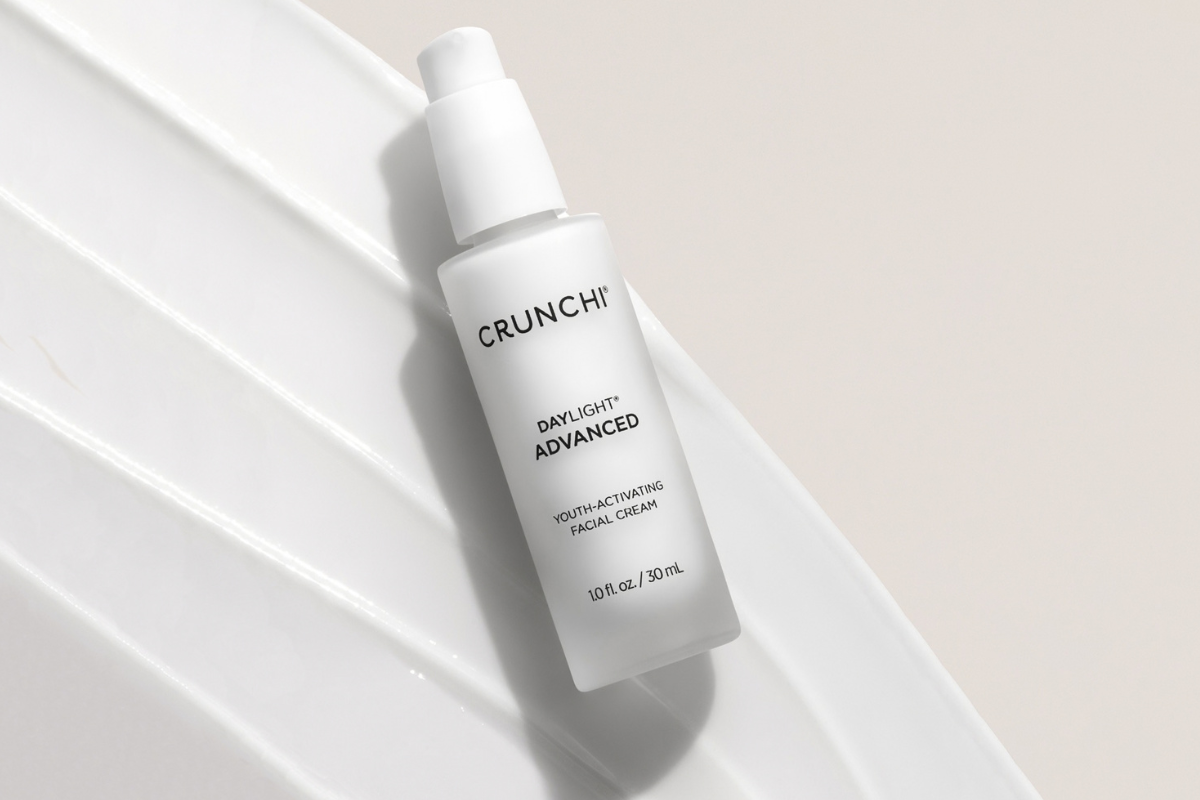
Crunchi's Daylight Advanced and Nightlight Advanced Facial Creams both feature a performance-driven Youth Activating Complex with bakuchiol. Both are EWG Verified, third-party tested for heavy metals, and free of retinol, synthetic fragrance, or any ingredients contraindicated during pregnancy. All Crunchi products are free of pregnancy-contraindicated ingredients along with 10,000+ banished ingredients.
Why Does Crunchi Use Bakuchiol instead of Retinol?
Retinol is an ingredient Crunchi has chosen to avoid since day one. I built Crunchi on one belief: safety and performance are never a trade-off. Bakuchiol is the clearest proof of that in practice. It achieves clinically comparable results to retinol for fine lines, firmness, tone, and texture, without the pregnancy contraindication, increased sun sensitivity, irritation profile, or reproductive toxicity concerns associated with vitamin A compounds.
Bakuchiol is the retinol alternative that does not ask you to trade safety for results.
Real clean. Real results. No shortcuts.
Frequently Asked Questions
Q: Is bakuchiol safe during pregnancy?
A: Bakuchiol is considered safe for use during pregnancy. It is a plant-derived ingredient from the Psoralea corylifolia plant and is not a vitamin A derivative. It has no established teratogenic risk, no photosensitivity concern, and no established contraindication for pregnant or breastfeeding individuals. Always consult your OB-GYN or midwife before introducing any new skincare ingredient during pregnancy.
Q: Is retinol safe to use during pregnancy?
A: No. Retinol and all vitamin A derivatives — including retinyl palmitate, tretinoin, adapalene, and retinoic acid — are contraindicated during pregnancy. The clinical consensus from ACOG and dermatologists is that all retinoids should be avoided during pregnancy and breastfeeding as a precaution, even though topical absorption is lower than with oral vitamin A.
Q: Does bakuchiol work as well as retinol for anti-aging? A: Yes, at comparable concentrations. The 2019 randomized, double-blind clinical trial published in the British Journal of Dermatology compared 0.5% bakuchiol twice daily against 0.5% retinol once daily over 12 weeks. Results showed statistically comparable reductions in fine lines, wrinkles, skin pigmentation, and firmness. Bakuchiol participants reported significantly fewer side effects than the retinol group. The researchers concluded bakuchiol is a clinically suitable retinol alternative.
Q: Can you use bakuchiol while breastfeeding?
A: Bakuchiol has no established contraindication for breastfeeding. It is not a vitamin A compound and has not been associated with developmental or reproductive harm in available research. Consult your healthcare provider for guidance specific to your situation.
Q: What is the difference between bakuchiol and retinol?
A: Retinol is a vitamin A derivative that converts to retinoic acid in the skin, binding retinoid receptors to drive cell turnover and collagen production. Bakuchiol is a plant-derived meroterpene phenol that is not a vitamin A compound. Per the 2019 British Journal of Dermatology clinical trial, bakuchiol achieves comparable anti-aging results through a distinct non-retinoid pathway — without binding the retinoid receptors responsible for retinol's side effects and safety profile. Same visible results but a much safer mechanism.
Q: Is bakuchiol safe for sensitive skin?
A: Yes. Bakuchiol has a lower irritation profile than retinol. In the British Journal of Dermatology 2019 clinical trial, bakuchiol participants reported significantly fewer instances of scaling, stinging, and dryness than retinol participants. Unlike retinol, bakuchiol does not require a gradual introduction period and can generally be used morning and evening from the start.
Q: Why is retinol on Crunchi's Banished List?
A: Crunchi bans retinol and all vitamin A derivatives because of the reproductive and developmental toxicity concerns, the established clinical contraindication during pregnancy, the photosensitivity and irritation profile, and the straightforward availability of a clinically proven alternative in bakuchiol.
Q: Which Crunchi products contain bakuchiol?
A: Bakuchiol is a key ingredient in Crunchi's Youth Activating Complex, featured in Daylight Advanced and Nightlight Advanced Facial Creams. Both are EWG Verified, third-party tested for heavy metals, and formulated without retinol, synthetic fragrance, and every ingredient on Crunchi's 10,000+ Banished List. Shop the Bakuchiol collection.
Shop Daylight Advanced and Nightlight Advanced.
Melanie Petschke is an APRN, FNP-BC, Board Certified Family Nurse Practitioner and Co-Founder of Crunchi, with 10+ years of research on environmental toxin exposure and cosmetic formulation safety. She built Crunchi on the conviction that safety and performance are never a trade-off.
Sources referenced in this article:
- Dhaliwal S, et al. Prospective, randomized, double-blind assessment of topical bakuchiol and retinol for facial photoageing. British Journal of Dermatology. 2019;180(2):289-296. https://pubmed.ncbi.nlm.nih.gov/29947134/
- FDA — Pregnancy and Lactation Labeling Rule: https://www.fda.gov/drugs/drug-approvals-and-databases/pregnancy-lactation-labeling-rule-information
- FDA — Isotretinoin (Accutane) Information and iPLEDGE Program: https://www.fda.gov/drugs/postmarket-drug-safety-information-patients-and-providers/isotretinoin-accutane-information
- American College of Obstetricians and Gynecologists — Skin Conditions During Pregnancy: https://www.acog.org/womens-health/faqs/skin-conditions-during-pregnancy
- EWG Skin Deep Database: https://www.ewg.org/skindeep/
- Campaign for Safe Cosmetics — Oxybenzone: https://www.safecosmetics.org/get-the-facts/chemicals/oxybenzone/
-
Crunchi Bakuchiol 101 Comparison Chart
These statements are designed for educational purposes only. You should not rely on this information as a substitute for, nor does it replace, professional medical advice, diagnosis, or treatment. If you have any concerns or questions about your health, always consult with a physician or other health-care professional.

Leave a comment
This site is protected by hCaptcha and the hCaptcha Privacy Policy and Terms of Service apply.