
EWG Verified is among among the most rigorous third-party safety certifications in the personal care industry. It means every ingredient in a product has been individually reviewed by the Environmental Working Group against documented safety standards — and passed. If a product carries the EWG Verified seal, it earned it.
By Melanie Petschke, APRN, FNP-BC, Co-Founder of Crunchi and Board Certified Family Nurse Practitioner with 10+ years of research on environmental toxin exposure and cosmetic formulation safety.
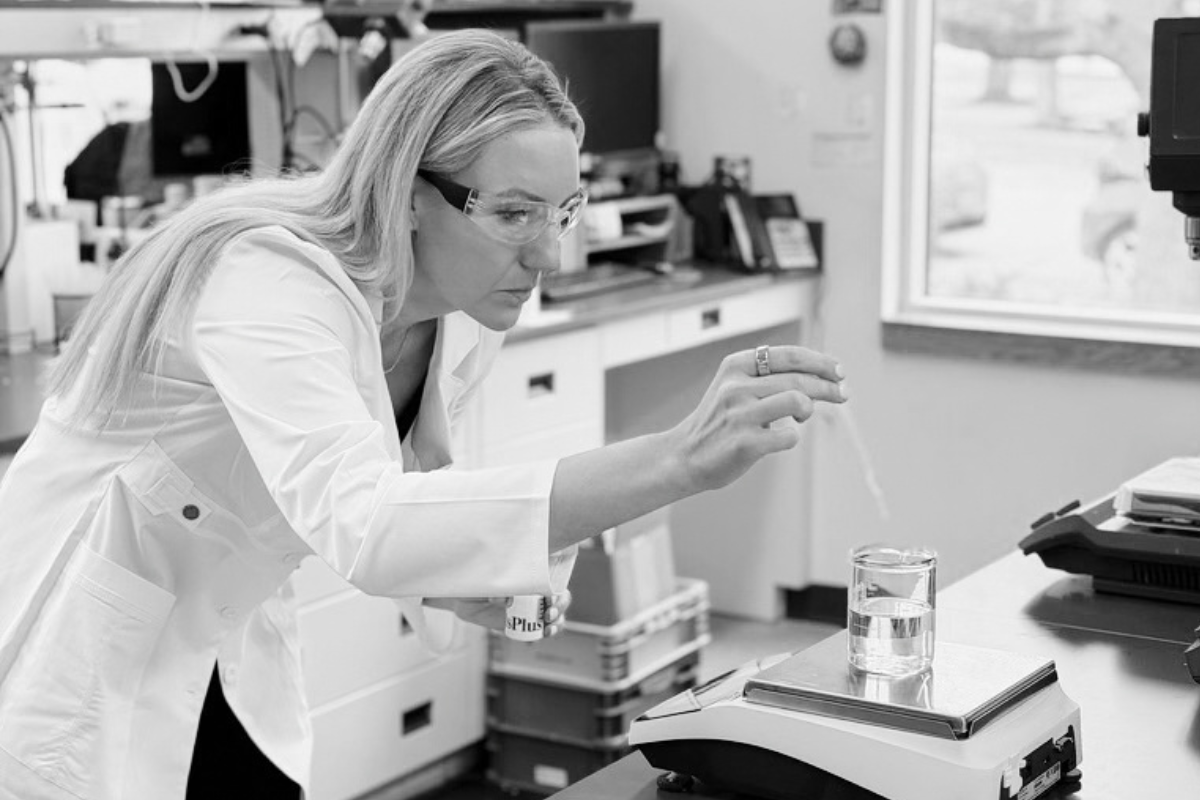
As a Board Certified Family Nurse Practitioner (APRN, FNP-BC) and cosmetic formulation safety researcher, I built Crunchi because I was tired of having to choose between product safety and product performance.
The science on ingredient safety in personal care products is clear and the regulatory framework in the U.S. has not kept pace with it. The products most people use every day have never been independently reviewed for safety. That is not an accident. It reflects the reality of the current U.S. regulatory system.
The U.S. FDA prohibits or restricts 11 cosmetic ingredients/ingredient classes, and the European Union bans over 1,700. At Crunchi, we ban over 10,000, and EWG Verified is the outside confirmation that our standards are real.
This article explains exactly what that certification means, what it takes to earn it, and why most brands, even those with clean-sounding marketing, have not gone through this process.
This article is for educational purposes only and does not constitute medical advice. Always consult a qualified healthcare professional with questions about your health.
What Is the EWG Verified Seal?
EWG Verified is a third-party certification issued by the Environmental Working Group, an independent nonprofit founded in 1993 by Ken Cook and Richard Wiles. It is not a rating or a database score. It is a formal evaluation program that requires brands to submit complete ingredient data, third-party safety testing, and full fragrance and ingredient transparency for every individual product.
The Environmental Working Group operates the Skin Deep cosmetic database, which rates over 120,000 personal care products on a scale of 1 to 10 based on publicly available label information. EWG Verified goes significantly further, as brands must apply, submit documentation, and pass review before a single product can carry the seal.
Crunchi currently has over 50+ EWG Verified products. That number represents individual applications, comprehensive ingredient reviews, and years of formulation work done with standards that meet and exceed EWG verification standards, from the start. Crunchi is rare in that we did not create a product line and then have to re-formulate to meet EWG verification standards. Instead, our internal brand standards intuitively met and exceeded the EWG Verification requirements.
How Does EWG's Ingredient Review Process Work?
EWG's science team, which includes PhD-level scientists and environmental epidemiologists, cross-references over 60 different databases when evaluating an ingredient. These include the European Chemicals Agency (ECHA), the EPA's CompTox Chemicals Dashboard, the Cosmetic Ingredient Review (CIR), and published research from academic institutions and government bodies including the National Institute of Environmental Health Sciences (NIEHS).
For every ingredient, EWG evaluates data across what the science team calls health endpoint "buckets," including irritation, allergic sensitization, endocrine disruption, carcinogenicity, reproductive toxicity, and contamination from things like heavy metals or pesticides. Each endpoint is scored independently, then combined using a hazard stack approach. The greatest concern at any endpoint drives the overall ingredient score.
That score then feeds into the product score. A product is not evaluated on its ingredient list in isolation. If 12 ingredients in one formula have skin irritation data attached, the cumulative risk is considered. That is the hazard stack in practice.
This is not algorithmic. A trained scientist reviews that data each time.
What Is the Difference Between Skin Deep and EWG Verified?
Skin Deep rates products based on publicly available label information. If the label lists an ingredient, EWG looks up that ingredient in their database and assigns a score. This is free, publicly searchable, and based on what the brand has already disclosed.
EWG Verified requires brands to proactively submit documentation that goes beyond the label. The distinction matters.
|
Feature |
Skin Deep |
EWG Verified |
|---|---|---|
|
Ingredient review |
Based on label |
Full submission required |
|
Fragrance transparency |
Based on disclosed info |
Full fragrance disclosure required |
|
Heavy metal testing |
Not required |
Required for applicable ingredients |
|
Science team review |
Database lookup |
Active scientist review |
|
Restricted ingredient documentation |
Not required |
Concentration limits and safety data required |
|
Annual standard updates |
Database updates |
Formal annual science update process |
|
Certification mark |
Score only |
Verified mark granted |
|
Fee involved |
None |
Evaluation and licensing fee |
The Skin Deep database is a starting point. EWG Verified is a higher standard — and most brands do not reach it.
What Are EWG's Unacceptable and Restricted Ingredient Lists?
EWG Verified products must clear two separate lists.
The unacceptable list is a hard no. Any product containing an ingredient on this list is disqualified from the program. No exceptions. Reformulation is required before the evaluation can proceed.
The restricted list is more nuanced, and in many ways more powerful. These are ingredients that may be safe under specific conditions, at concentrations below a defined threshold, when sourced without pesticide contamination, or when third-party tested for heavy metal purity. Brands must submit documentation proving the condition is met for each restricted ingredient in each product.
For Crunchi, this means our science and formulation team prepares detailed third party testing documentation, safety dossiers, and certificates of analysis for every restricted ingredient across our verified line. By the time we submit an application, we typically have the data EWG is going to ask for before they ask.
That is not luck. That is a result of building products with verification as the standard from the beginning, not as an afterthought.
Why Is Full Fragrance Transparency Required?
The word "fragrance" on an ingredient label is a legal loophole. Under U.S. law, a brand can list a single word “fragrance”, “natural fragrance”, “parfum”, or “aroma” and shield dozens or more undisclosed ingredients behind it as a trade secret. Many of those hidden ingredients have health concerns attached. Research published by EWG and others has identified synthetic musks, phthalates, and allergens routinely hiding behind "fragrance" disclosures.
EWG Verified requires complete fragrance ingredient disclosure, without exception.
For brands that do not have space on packaging to list all fragrance components, a small lip balm for example, EWG's current standard allows for an asterisk on the label directing consumers to a full ingredient listing on the product's web page. That concession to practicality does not reduce the transparency requirement. The information must be publicly available and fully disclosed during the evaluation process.
Crunchi does not hide behind fragrance. Each ingredient is meticulously sourced, prioritizing organic, always non-GMO, and third-party verified for purity. That commitment existed before EWG required it of us.
How Do EWG's Standards Protect Against Contamination?
An ingredient's safety is not only about what it is — it is also about what else it carries.
EWG's evaluation process includes contamination screening for applicable ingredients. Colorants and certain naturally-derived ingredients can carry trace heavy metals through the sourcing or manufacturing process. EWG requires testing documentation that goes beyond legal requirements.
Crunchi's approach to heavy metal safety goes further than testing alone. From day one, the focus has been on preventing heavy metals and other contaminants from entering formulas in the first place. Crunchi exclusively uses high-purity mineral iron oxide pigments from established cosmetic pigment manufacturers. These pigments are insoluble, chemically stable, and manufactured to stringent purity specifications, including ICP-based elemental impurity testing. Additionally, we intentionally avoid synthetic FD&C and Lake colorants as part of our preference for simpler mineral pigment chemistry and avoidance of petrochemical-derived colorants.
Since 2019, Crunchi has run a formal third-party laboratory testing program for heavy metals including lead, arsenic, mercury, cadmium, and frequently antimony and others. Testing operates on two tracks: individual ingredients at risk for contamination are third-party tested by an accredited lab at the supplier level, and finished formulas are sent by Crunchi to an accredited lab for independent verification.
All results to date have come back well below, or non-detectable against, the European Union, Canadian, and United States published restrictions and guidelines for heavy metal upper limits. The goal is non-detectable, or as close to non-detectable as possible, while remaining far below EU and Canadian published limits.
All results to date have come back well below — or non-detectable against — the European Union, Canadian, and United States published restrictions and guidelines for heavy metal upper limits. The goal is non-detectable, or as close to non-detectable as possible, while remaining far below EU and Canadian published limits.
How Does EWG Keep Its Standards Current?
EWG Verified is not a static certification. The program undergoes a formal science update every year. New research is synthesized, restricted and unacceptable ingredient lists are updated, and brands are notified of any changes that affect their Verified products.
If a brand's product no longer meets updated standards, they must reformulate or lose the mark. This has happened. EWG has removed large, well-known brands from the program when they declined to comply with science-based updates to fragrance disclosure requirements.
That is not a flaw in the program. That is evidence that it works.
From the other direction: when new research confirms an ingredient's safety, restrictions can be loosened. The program moves with the science. That is the only honest way to maintain a safety certification in a field where the research base is constantly expanding.
How Does EWG Verified Compare to U.S. Cosmetics Regulation?
The U.S. Food and Drug Administration has not meaningfully updated cosmetics safety law since 1938. The Modernization of Cosmetics Regulation Act (MoCRA), passed in 2022, introduced incremental improvements, including mandatory adverse event reporting and expanded FDA facility registration, but the core gap remains.
The U.S. bans 11 cosmetic ingredients. The European Union restricts over 1,700. The EU's regulatory framework requires pre-market safety assessments. The U.S. does not.
EWG is actively involved in advocacy for stronger federal and state-level cosmetics regulation. In 2023, EWG sponsored the California Toxics-Free Cosmetics Act, which will ban over two dozen chemicals from fragrances and cosmetics when it takes full effect in 2027. Because reformulating for California means reformulating for the country, this state-level law has national reach.
Until federal law catches up, EWG Verified serves as the standard the market can actually act on right now.
Why Does Crunchi Pursue EWG Verification Across Its Full Line?
Crunchi was founded on the conviction that your skin deserves more than what the law allows. That is not a marketing position. It is the reason I became a formulator.
As a Board Certified Family Nurse Practitioner (APRN, FNP-BC) with a deep focus on cosmetic formulation safety, I built Crunchi at the intersection of clinical health science and ingredient research. The connection between chemical exposure and health outcomes is well-documented in the scientific literature. Our standards reflect that evidence.
When I co-founded Crunchi with Kelly Kreusler, we made a decision that would define every formula we built: no shortcuts. Not on ingredients, not on sourcing, not on testing, and not on transparency.
EWG Verified is the external validation of that commitment. It is not the origin of it.
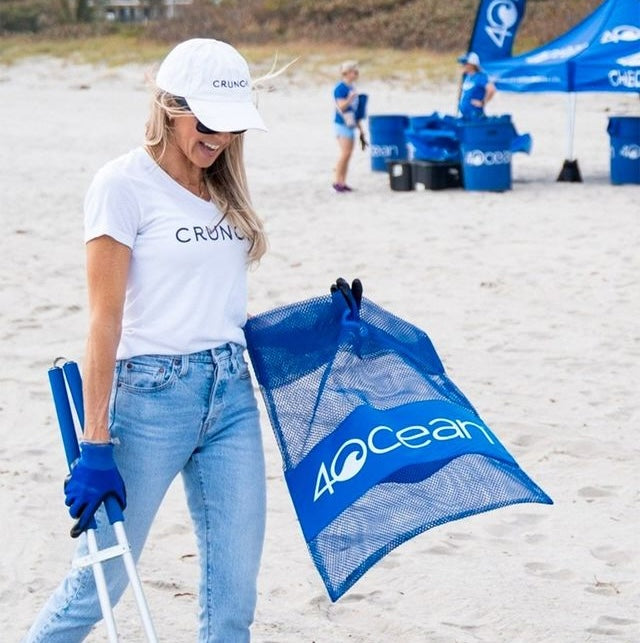
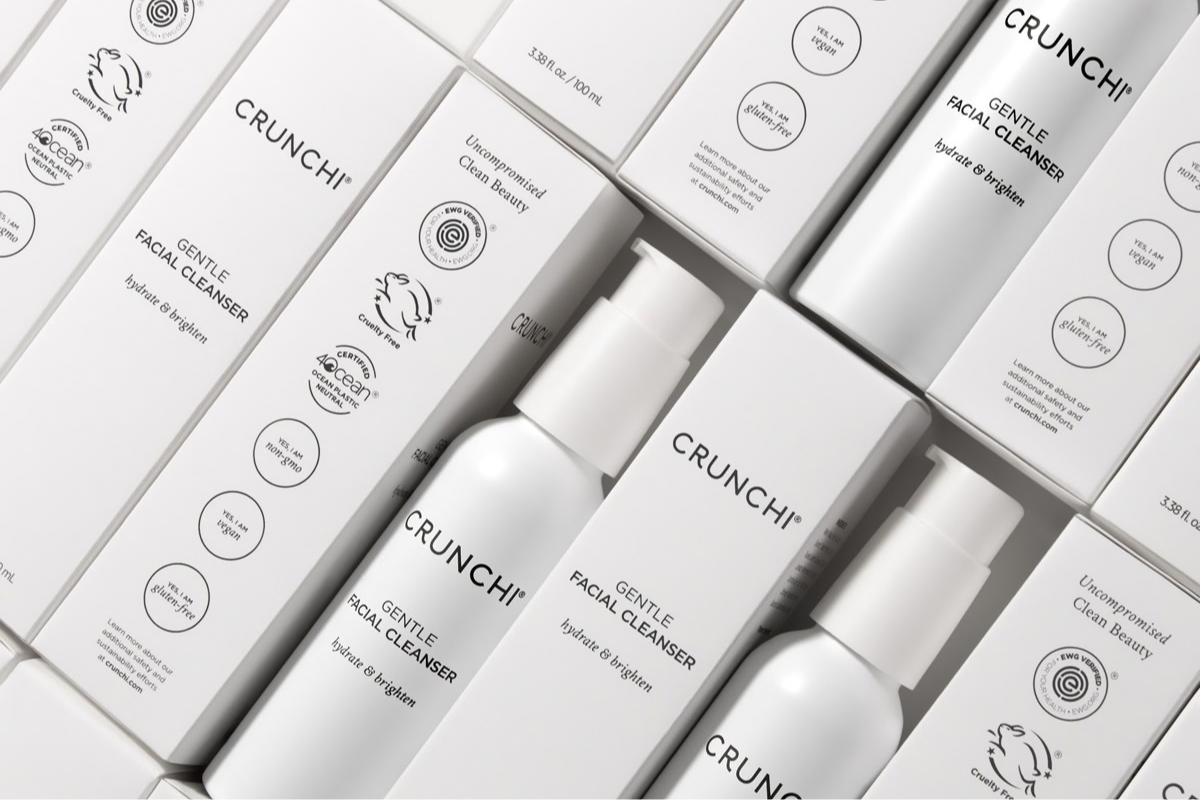
Crunchi also holds Leaping Bunny Certified Cruelty-Free status and 4ocean Certified Plastic Neutral certification. Crunchi formulas are also Non-GMO and Gluten-Free — standards built into every formula from day one. Every certified commitment required independent documentation and review. None are self-declared.
When you reach for a Crunchi product, you are not trusting a label. You are trusting a stack of certifications that independent organizations have confirmed.
Frequently Asked Questions
Q: What does EWG Verified mean on a product label?
A: EWG Verified means the product's complete ingredient list has been reviewed by the Environmental Working Group's science team and confirmed to meet their safety, transparency, and testing standards. It is a third-party certification — not a self-declared claim.
Q: Is EWG Verified the same as a high Skin Deep score?
A: No. A high Skin Deep score reflects EWG's database assessment of publicly available label information. EWG Verified requires brands to proactively submit full ingredient data, third-party testing documentation, and fragrance transparency for a formal review. They are separate programs with different requirements.
Q: Do brands pay to get EWG Verified?
A: Brands do not pay to receive the EWG Verified mark. Products must meet all scientific standards before a certification is granted. An evaluation fee applies whether a product meets their standard or not. This is standard practice for certification programs and supports EWG's operations as a nonprofit. EWG has never accepted payment to rate a product in any of its databases.
Q: How does EWG handle new ingredients that are not yet in their database?
A: EWG's science team conducts a full database review for any ingredient that has not yet been assessed. The product cannot move through the verified program until all of its ingredients have been reviewed to the same safety standard applied to ingredients already in the database.
Q: How often does EWG update its safety standards?
A: EWG conducts a formal science update at the end of every year. New research is incorporated, and restricted and unacceptable ingredient lists are updated accordingly. Brands are notified of any changes that affect their verified products.
Q: Why does Crunchi ban more than 10,000 ingredients when EWG Verified already has strict standards?
A: Crunchi's internal Banished List reflects our own standards, which go beyond what any single certification requires. Our formulation philosophy starts from the question of what an ingredient can do and works backward. EWG Verified confirms that we meet the industry's most rigorous external standard. Our Banished List reflects the internal standard we hold ourselves to regardless of what any certification requires.
Q: Is EWG Verified worth more than other clean beauty certifications?
A: EWG Verified stands apart in the beauty industry because it combines publicly disclosed scientific criteria, a full-time science staff including PhD-level scientists, and a requirement for complete fragrance ingredient transparency — all in one program. Other certifications address specific concerns: Leaping Bunny covers cruelty-free practices, 4ocean addresses plastic neutrality. For comprehensive ingredient safety and transparency, EWG Verified is the most rigorous standard available to consumers today.
Shop the EWG Verified collection.
Melanie Petschke is an APRN, FNP-BC, Board Certified Family Nurse Practitioner and Co-Founder of Crunchi, with 10+ years of research on environmental toxin exposure and cosmetic formulation safety. She built Crunchi on the conviction that safety and performance are never a trade-off.
Sources referenced in this article:
- FDA Authority Over Cosmetics: https://www.fda.gov/cosmetics/cosmetics-laws-regulations/fda-authority-over-cosmetics-how-cosmetics-are-not-fda-approved-they-are-fda-regulated
- EWG Skin Deep Database: https://www.ewg.org/skindeep/
- EWG Verified Program Criteria: https://www.ewg.org/ewgverified/
- EWG Fragrance Research: https://www.ewg.org/news-insights/news/2019/05/ewg-research-finds-fragrance-chemicals-can-hide-behind-single-word
- Campaign for Safe Cosmetics — Fragrance: https://www.safecosmetics.org/get-the-facts/regulations/us-laws/fragrance/
- EU Cosmetics Regulation (EC) No 1223/2009: https://ec.europa.eu/growth/sectors/cosmetics/cosmetics-regulation_en
- European Chemicals Agency (ECHA): https://echa.europa.eu/
- EPA CompTox Chemicals Dashboard: https://comptox.epa.gov/dashboard/
- Cosmetic Ingredient Review: https://cir-safety.org/
- NIEHS: https://www.niehs.nih.gov/
- FDA — MoCRA: https://www.fda.gov/cosmetics/cosmetics-laws-regulations/modernization-cosmetics-regulation-act-2022
-
California Toxics-Free Cosmetics Act — OEHHA: https://oehha.ca.gov/

Leave a comment
This site is protected by hCaptcha and the hCaptcha Privacy Policy and Terms of Service apply.