

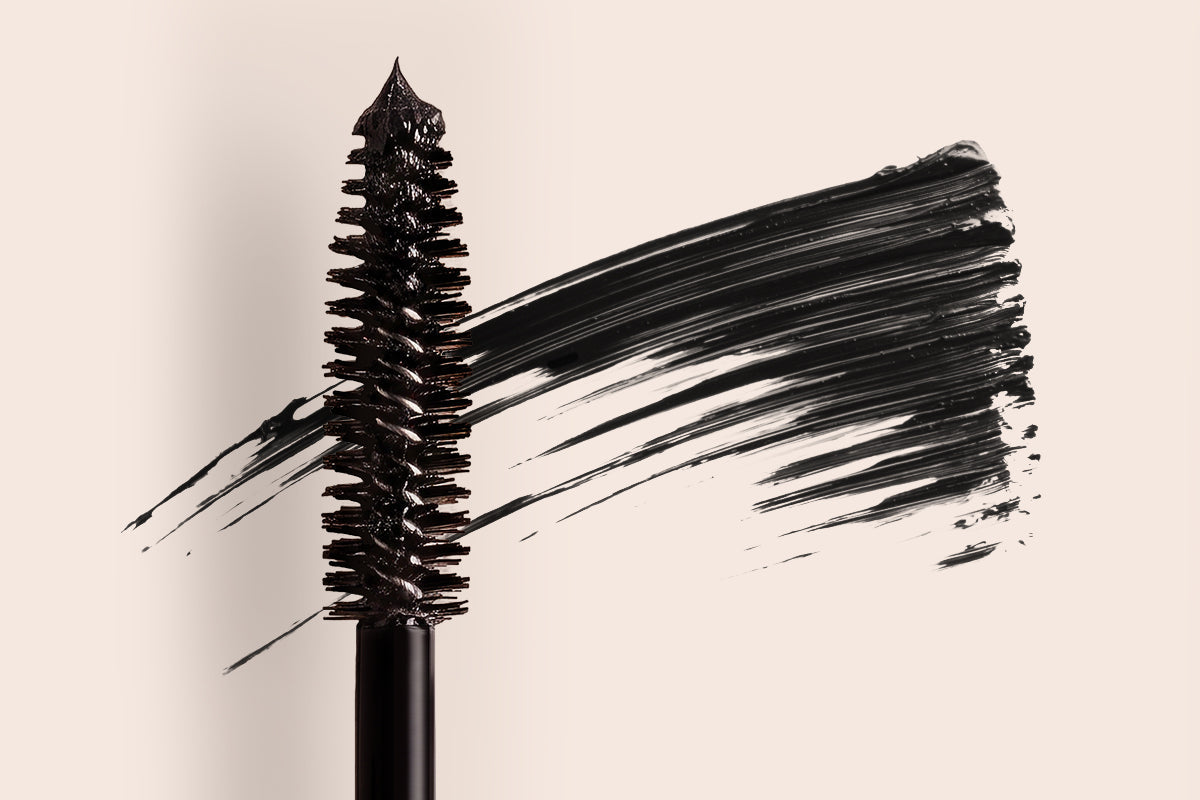
You probably know exactly what you want from your mascara: longer, fuller-looking lashes, beautiful definition, and color that stays exactly where you put it. What is less obvious is how the ingredients in a mascara formula work together to make that happen, and which ones deserve a closer look.
Most mascara is made of pigments for color, waxes for volume and texture, film formers for length, definition, and lasting wear, and preservatives that protect the formula from microbial growth. Water or other solvents, along with emulsifiers, bring it all together, and some formulas add conditioning ingredients to care for your lashes over time.
As a Board-Certified Nurse Practitioner, co-founder, and the product developer behind Crunchi’s products, I care deeply about what goes into the products you use every day, and why. When it comes to mascara ingredients, I want you to understand what each one does, how we decide which ingredients make the cut, and why we leave certain ingredients out.
What is actually in mascara
Pigments create the color you see
The darker, more defined look you get from mascara starts with pigment. In a classic black formula, black iron oxide, which you may see listed as CI 77499, is one option, and carbon black, also called CI 77266 or D&C Black No. 2, is another.
Both can create beautifully black lashes, but they are very different ingredients. Choosing a pigment involves more than finding the right shade. Quality, purity, certification, and how evenly it blends into the formula all matter.
Waxes help build volume
Waxes give mascara its texture and structure, helping the formula coat and build volume on your lashes. Carnauba, candelilla, sunflower, beeswax, and synthetic waxes are examples you may recognize on an ingredient list.
Think about the difference between a light coat that defines each lash and a second or third coat that adds fullness. The wax blend helps shape that experience. The goal is to build the look you want while keeping the application smooth and manageable, without clumping.
Film formers help your mascara stay put
If you have ever wondered why mascara does not simply slide off your lashes, film formers are a big part of the answer.
Film-forming ingredients are like the invisible framework of mascara. They help the pigment adhere to your lashes, create a flexible coating, and keep it in place while you wear it. Different film formers work in different ways, so they are often combined to balance adhesion, flexibility, and long-lasting wear.
The right combination needs to stay on your lashes while moving with them throughout the day. You may see film former ingredient names such as “acrylates copolymer” on a label. These names sound technical because they are. One important thing to keep in mind is that not all film formers are created equal. Even when the name on two ingredient lists looks the same, the specific raw material behind it can vary vastly. Without a doubt, the most challenging part of formulating mascara has been finding film formers that meet all of Crunchi’s meticulous safety and performance standards.
Preservation helps keep the formula protected
Your mascara wand makes the same trip over and over: from the tube to your lashes and back again. It is normal for microorganisms to live on our eyelashes, and every trip can carry them into the tube. Because many mascaras also have a high water content, they can become a breeding ground for microbes such as Staphylococcus epidermidis, Streptococcus species, and fungi.
A robust, broad-spectrum preservation system helps control that microbial growth, and for a product used so close to your eyes, it is essential. While many common preservatives do not meet Crunchi’s ingredient standards, preservation itself is non-negotiable. A “preservative-free” claim on a mascara should be a red flag. It is also why mascara should be replaced every three months after opening.
Supporting ingredients bring it all together
Water or other solvents help carry the formula onto your lashes. Emulsifiers keep water- and oil-based ingredients mixed, while thickeners help control the texture. Humectants, such as glycerin, attract and hold moisture.
While many of these ingredients will never make a headline on the box, each has an important job in helping your mascara apply, feel, and perform the way you expect.
How is mascara made
For a typical water-based mascara, the water-containing and wax-containing portions are prepared separately and heated as needed. The pigments are carefully dispersed, the portions are mixed, and the formula is cooled under controlled conditions. Ingredients that are sensitive to heat are added at an appropriate stage.
Even small changes in that process can affect the texture. And the formula is only part of your experience: the brush and the wiper inside the tube control how much product actually reaches your lashes.
This is one reason two mascaras with some of the same ingredients can feel very different when you apply them.
Are there mascara ingredients worth avoiding
There are many ingredients and ingredient categories we choose not to use when developing Crunchi products. Some raise concerns about impurities or allergies, while others bring environmental concerns or questions that the available safety data cannot fully answer.
It is also important to explain those concerns accurately. The amount of an ingredient, how you are exposed to it, and the finished formula all matter. An ingredient appearing on an exclusion list does not tell you that every product containing it will cause harm. It tells you that when a better option exists, we choose it.
Every Crunchi product is EWG Verified®, a standard that excludes thousands of ingredients of concern, and our Banished Ingredients List highlights some of the worst offenders.
Here are four ingredients or ingredient families worth checking for on a mascara label, why you may want to avoid them, and what to look for instead.
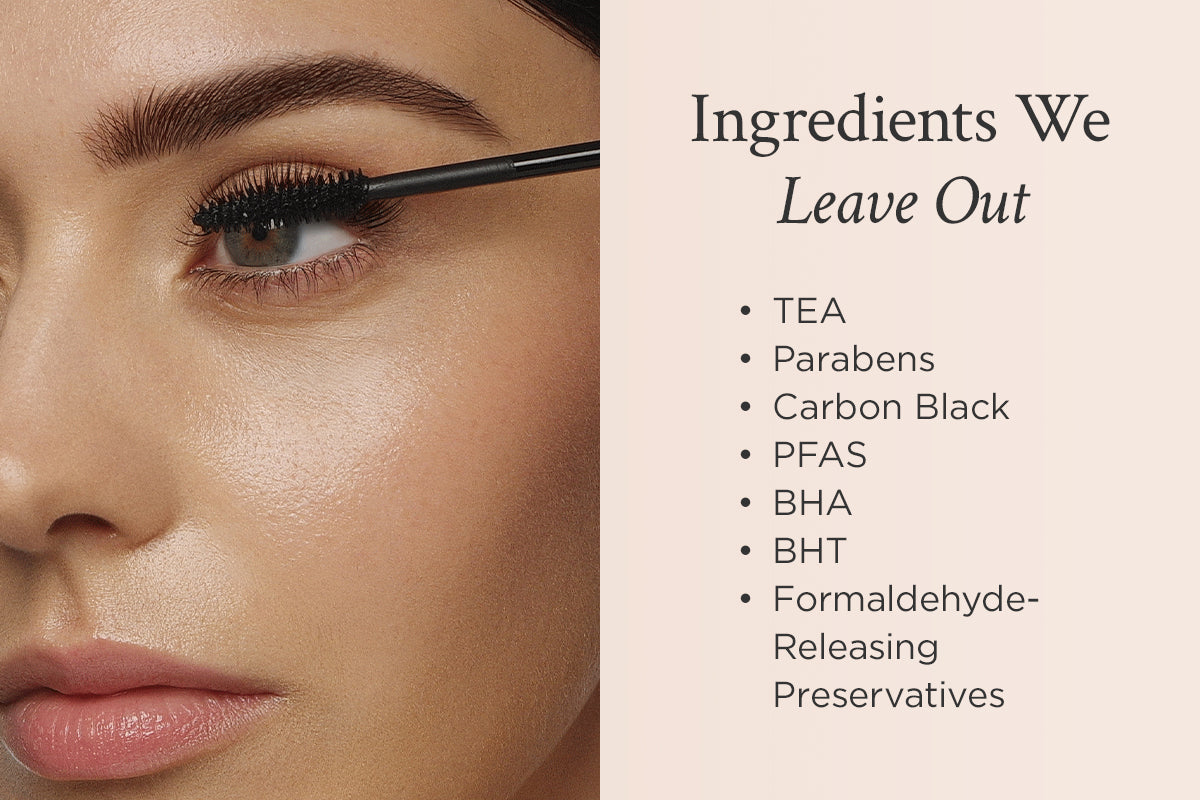
Carbon black
Carbon black creates the deep, rich black consumers expect from mascara. In the United States, D&C Black No. 2 (CI 77266) is an FDA-approved color additive that may be used in mascara when it meets FDA specifications and batch certification requirements. So why don’t we use it? Carbon black is produced through combustion processes that create the potential for impurities, including polycyclic aromatic hydrocarbons (PAHs). FDA specifications limit these impurities, but certification sets a minimum standard. It does not mean a pigment contains zero contaminants.
Crunchi takes a different approach. We choose high-purity black iron oxide (CI 77499), a mineral-origin pigment with a fundamentally different impurity profile, and every batch of that raw material is tested for heavy metals and contaminants, including PAHs. We don’t simply ask whether an ingredient is legally permitted. We ask whether there is a better choice, and then we verify it.
Ethoxylated Ingredients
Ethoxylated ingredients are widely used in mascara because they provide valuable functional properties, including emulsification, dispersion, and film-forming performance. Ingredients such as Laureth-19 and Laureth-21, for example, can help create the flexible, durable coating responsible for length, definition, buildability, and wear.
Our decision not to use them is not based on the premise that every ethoxylated ingredient is inherently unsafe. Rather, the ethoxylation process can leave trace 1,4-dioxane, a manufacturing byproduct that FDA recognizes as a potential contaminant in certain ethoxylated cosmetic ingredients, and that will never appear on an ingredient label. Instead of managing that potential contaminant after the fact, we formulate without this entire category. Achieving high performance without it is one of the hardest challenges in formulating a clean mascara.
Parabens, Phenoxyethanol, BHT, & Formaldehyde-releasing preservatives
Preservation is one area of mascara formulation where there is simply no room for compromise. But how a formula is preserved still matters. Crunchi has chosen to exclude formaldehyde-releasing preservatives, parabens, BHT, phenoxyethanol as well as other potentially harmful options. They do not all carry the same concerns, and our decision is based on minimizing unnecessary exposure when effective alternatives exist.
Formaldehyde-releasing preservatives, such as DMDM hydantoin, imidazolidinyl urea, diazolidinyl urea, and quaternium-15, slowly release formaldehyde, a well-established sensitizer that can irritate the skin, eyes, and airways, and that has been linked to cancer with significant or prolonged exposure. Parabens have drawn scientific attention because some can interact with estrogen receptors. BHT, an antioxidant rather than a conventional preservative, has raised toxicological questions about endocrine, reproductive, and developmental effects. Phenoxyethanol, one of the most widely used cosmetic preservatives, is primarily associated with irritation and sensitization, among other toxicity concerns.
Eliminating these categories does not make preservation less important. In fact, it makes formulation considerably more challenging. Look for a mascara preserved primarily with ingredients like 1,2-Hexanediol and Caprylyl Glycol, with a small amount of Sodium Dehydroacetate, ingredients that Cosmetic Ingredient Review has evaluated and supported as safe as used in cosmetics. Most importantly, look for a brand that proves its preservation system works in the finished formula, so your mascara stays protected throughout its shelf life and intended use.
PFAS
PFAS, or per- and polyfluoroalkyl substances, are one way formulators make mascara resist water, tears, sweat, and humidity, because they repel water and oils exceptionally well. PFAS such as PTFE (polytetrafluoroethylene) have been used in some mascaras, particularly products marketed as waterproof or long-wearing. Recent FDA data confirm that intentionally added PFAS are still used in cosmetics, with PTFE reported in some mascara formulas at concentrations as high as 13%.
PFAS and similar chemical ingredients have been prohibited in Crunchi formulas since day one. Often called “forever chemicals,” PFAS are extraordinarily persistent in the environment. Some can persist in the human body, and some members of this very large family have been associated with effects on the immune system, development, reproduction, and certain cancers. PFAS are not one single chemical, and the health data are not equally established for every member of the class, but significant data gaps remain for many of those used in cosmetics.
It is also worth knowing that waterproof does not automatically mean PFAS. Water resistance can come from waxes, oils, silicones, film formers, and combinations of these. Instead of relying on the claim, check the ingredient list: names containing PTFE, perfluoro-, or polyperfluoro- can indicate intentionally added PFAS, although not every ingredient containing “fluoro” belongs to the PFAS family. At Crunchi, we achieve long wear with film formers, waxes, and oils, never fluorinated chemistry.
What clean mascara means at Crunchi
For Crunchi, "clean" isn't a marketing label or a short list of ingredients we left out. It's a standard we verify. When we develop a mascara, our ingredient standards and performance expectations guide every decision. The formula needs to meet both and deliver results that make you want to reach for it every day.
Our approach strategically combines naturally derived ingredients with carefully selected synthetics. We look beyond whether an ingredient comes from a plant or a laboratory, considering its purpose, safety data, purity, and how it works in the finished formula.
We also test beyond what the industry requires. We run preservative efficacy testing twice when the norm is once. Our mascara is ophthalmologist-tested and suitable for sensitive eyes and contact lens wearers, screened for heavy metals, and independently confirmed gluten-free.
Clean also extends to what holds the formula. As a company, we see plastic as the enemy. It contributes to so many environmental and health challenges, and while some components are not yet possible to make without it, we eliminate plastic wherever we can. Glass packaging is a rarity in the mascara world, and worth looking for.
Clean at Crunchi also means you shouldn't have to compromise. A clean mascara should still hold its curl, build volume, and stay put all day. Safety, performance, and sustainability aren't trade-offs. They're all the job.
A few more mascara questions answered
Is “natural” mascara always better for sensitive eyes
No. A big misconception in clean beauty is that “natural” means safer and free from irritation or allergic reactions. This could not be further from the truth. Ingredients of natural origin are not exempt from causing irritation, and there are plenty of circumstances where safety-vetted synthetic ingredients are actually less likely to irritate. If you have sensitive eyes, look for products that are third-party ophthalmologist-tested and suitable for sensitive eyes. And if you ever experience irritation or a reaction to any product, stop using it immediately and consult a qualified healthcare provider.
How long should you keep mascara
Mascara lasts about three months after opening. Replace it then, or sooner if it dries out, changes smell, or irritates your eyes. Never share mascara, and if you develop an eye infection, throw out the mascara you were using and start with a fresh one once the infection has cleared.
Does an unfamiliar ingredient mean I should change my mascara
Not necessarily. An unfamiliar name alone is not a reason to discard your mascara. Consider the complete formula, your known sensitivities, and the information the brand provides about its ingredient standards and third-party verification. If a product causes irritation, stop using it.
Sources
- FDA on PFAS in cosmetics
- SCCS on formaldehyde allergy and releasing preservatives
- FDA on permitted cosmetic color additives
- FDA on eye cosmetic safety
- FDA on 1,4-dioxane in cosmetics
- Cosmetic Ingredient Review safety assessments (1,2-glycols; sodium dehydroacetate)
- NIEHS on endocrine disruptors
- Microbial contamination of mascara (PubMed 18922495)
- EWG Verified® standards
Melanie Petschke is a Board-Certified Nurse Practitioner and co-founder of Crunchi®, an EWG Verified® clean beauty brand. She has over 15 years of experience studying ingredient safety and over a decade in product development. She writes about ingredient safety, clean living, and the science behind what we put on our skin.

Leave a comment
This site is protected by hCaptcha and the hCaptcha Privacy Policy and Terms of Service apply.