

When choosing mascara, look for a formula and brush designed to deliver length, buildable volume, definition, lift, and curl together. The ingredients determine how the mascara coats and holds on to your lashes. The brush determines how that formula is deposited and how your lashes are separated and positioned during application. You need both working well to get the result you want.
As a product developer, nurse practitioner, and Crunchi co-founder, I care about the details behind that result. Which ingredients give the formula structure? What helps the coating stay flexible? Can the brush reach the finer lashes and build fullness without losing definition? And how does the finished product feel around the eyes after hours of wear?
To understand what makes a mascara perform, it helps to look at how a mascara is developed, from the wax blend to the brush that delivers it.
How to choose mascara by the benefits you want
Length, volume, definition, lift, and curl are related benefits, but they describe very different results. Breaking down what each one means makes it easier to understand what your current mascara is missing.
Length makes more of the lash visible, particularly the fine tips that can be difficult to see without mascara. The benefit is a longer-looking lash line with more reach from base to tip.
Volume increases the visible thickness of individual lashes. Building an even coating gives the lash line a fuller, more substantial appearance.
Definition and separation help individual lashes remain distinct. Definition gives each lash a clear outline; separation keeps lashes from sticking together. Together, they help fullness look more evenly distributed across the lash line.
Lift describes the upward direction of the lashes, especially at the base. It makes more of the lashes visible from the front and can give the eyes a more open appearance.
Curl describes the curve along the lash. It adds shape and an upward sweep. A mascara's ability to help maintain that curve depends on the formula, the applicator, the amount applied, and your natural lashes. Lift and curl can work together, but they are not interchangeable.
Why the brush and formula combination matters so much
A mascara formula is developed to flow under the movement of a brush, deposit onto lashes, and then set. Its thickness, how readily it spreads, and how quickly it sets affect what the brush can do. Meanwhile, the brush's bristle length, spacing, flexibility, and shape determine how much formula it carries and how it moves between lashes.
Imagine a brush loaded with a thick formula. If too much product reaches the lash line at once, the bristles may struggle to comb it through. You get a heavy deposit and lashes that collect into groups. Change the amount on the brush, its bristle arrangement, or the formula's consistency, and the application can change considerably.
The reverse matters, too. A brush that separates beautifully may deliver very little volume if it deposits too little formula. A rich formula cannot deliver its intended fullness if the applicator leaves most of it behind.
There is also a small component inside the tube opening called the wiper. As you remove the wand, it controls how much product remains on the brush. It helps determine whether the first stroke feels controlled or overloaded. That makes the formula, brush, and wiper a combination that needs to be evaluated together.
From a development perspective, a formula that looks promising on its own still has to perform through its applicator. I look at how evenly the first coat distributes, whether a second coat builds real fullness, and whether lashes retain their shape as the mascara dries. That’s ultimately how you assess a superior product you will actually reach for.
Which ingredients and brush features help build volume
Waxes give mascara body and structure. They help build a coating around the lashes, creating visible thickness. The type and balance of waxes affect how creamy the formula feels, how readily it layers, and how the coating behaves after application.
Two examples are organic beeswax and carnauba wax. Organic beeswax contributes structure and a creamy texture for buildable volume and definition. Carnauba is a plant-derived wax that adds firmness to the blend. Together with the rest of the formula, these waxes help create the substance needed to coat lashes while preserving control during application.
For volume, look beyond brush size. Some brushes have shorter bristles or spaces designed to carry a useful amount of formula. Longer bristles can then comb that deposit through the lashes. A larger brush isn't automatically more volumizing; what matters is how well it delivers and distributes the formula along your lash line.
I look for fullness that increases with another coat while individual lashes remain visible. If the only change is that several lashes become one thick cluster, you are losing definition as you build.
What helps mascara create visible length and definition
Length starts with mascara reaching the ends of the lashes. A formula needs to spread evenly enough to coat those finer tips, and the brush should deliver it there without leaving a heavy bead behind.
Pigment makes the lash visible. High-purity iron oxides are one pigment option that provides color. The wax blend supplies body, while film-forming ingredients help the coating adhere. These ingredients each contribute to the result; no single one creates a longer-looking lash on its own.
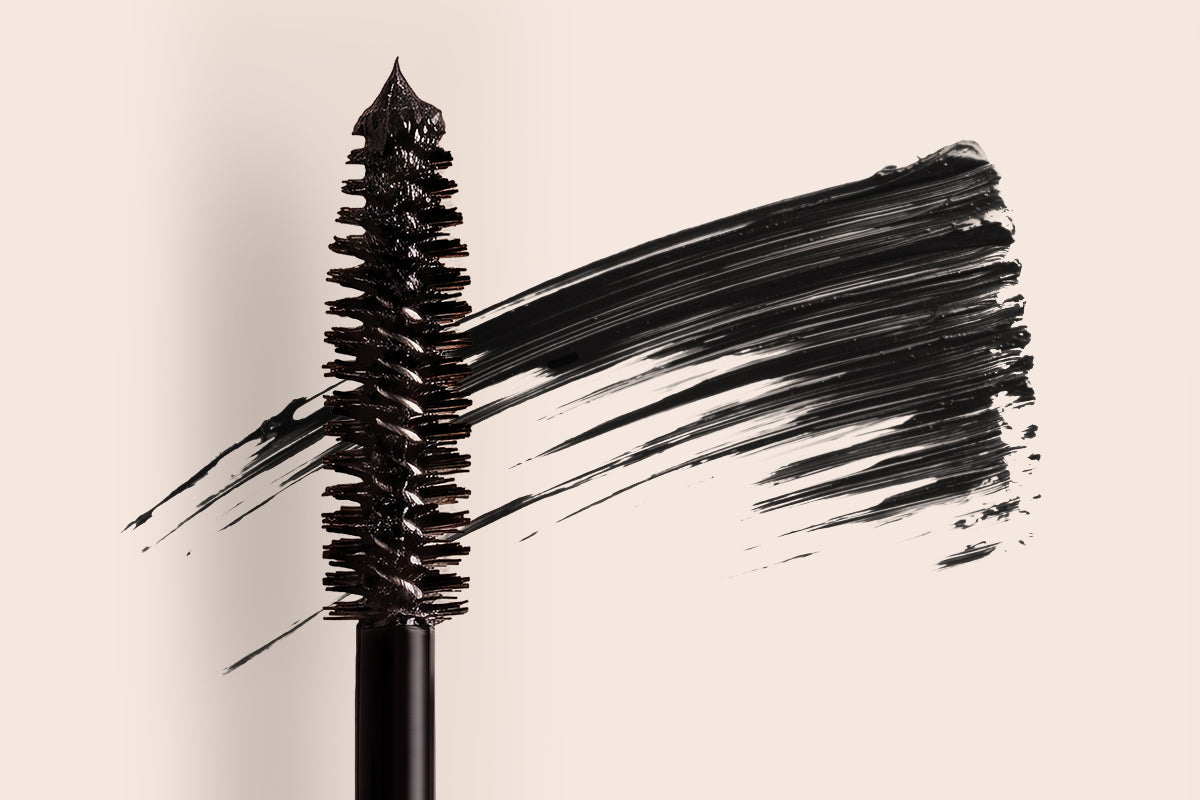
The brush helps determine how clearly you see that result. Bristles that reach between lashes can distribute the coating and separate the tips. A narrower or tapered end can make smaller corner lashes easier to reach. Molded brushes can offer precisely arranged combing elements, while fiber brushes can be shaped and trimmed in many different ways. Either can work well when paired with a compatible formula.
Definition also depends on texture. Xanthan gum, for example, is a thickening and stabilizing ingredient that helps manage the formula's consistency. It supports how the product handles, but it is not a lengthening fiber.
What helps lift lashes and support curl
The brush positions the lashes during application; the formula helps maintain the finished coating as it sets. A curved brush can help follow the lash line and guide lashes upward. Other brush shapes can also lift effectively when their bristles engage the lashes and distribute the formula evenly.
For curl, more product is not always better. A heavy coating can weigh lashes down. A formula that sets too quickly can be difficult to shape, while one that stays wet too long may not hold the position you created. The goal is a controlled deposit with enough working time to style the lashes and enough hold once it sets.
Film former ingredients are important here. They create a thin coating that helps mascara adhere to lashes. Depending on the blend, they can contribute hold, flexibility, and resistance to water or transfer. A film needs to support the finished shape without becoming unnecessarily brittle. Choosing the wrong film former can result in cracking and flaking as the lash moves.
Many mascaras combine film formers, such as VP/Eicosene Copolymer, Acrylates/Ethylhexyl Acrylate Copolymer, and PVP, alongside a wax blend to support the coating and extended wear. The performance comes from how these ingredients work cohesively in the finished formula. When evaluating a mascara for lift and curl, compare the lashes immediately after application and later in the day. Has their upward direction changed? Is the curve still visible? Have extra coats added weight? These observations tell you more than the brush shape alone.
How our ingredient standards guide those choices
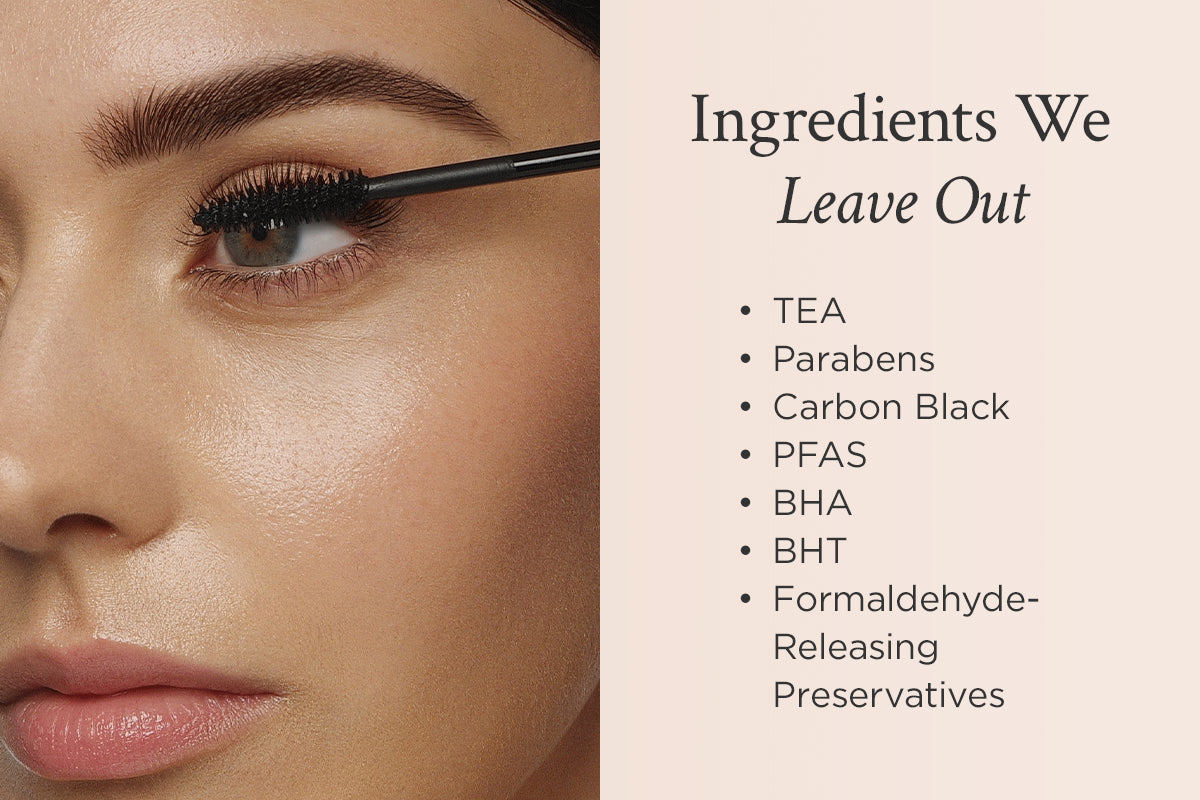
For Crunchi, clean formulation means meticulously evaluating the ingredients that make performance possible, while adhering to our rigorous ingredient safety standards. Naturally derived waxes, a variety of conditioning ingredients, and carefully selected synthetic film formers each serve a purpose.
Whether or not an ingredient has a “natural” or synthetic origin alone does not tell you whether it belongs in a Crunchi formula. We consider its function, the safety information, and its suitability for the intended use. Complete ingredient transparency matters, and you should be able to see and understand why we choose ingredients.
Our published ingredient Banished List provides a high-level explanation of some of the many ingredients not permitted in Crunchi formulas. The ingredients we choose to include deserve just as much explanation.
For a deeper explanation of those ingredient categories, read What Is Mascara Made Of?.
When you choose your next mascara, consider the whole experience. How does the brush place the formula? What happens when you add more coats? Do your lashes remain defined and lifted? Is the product comfortable throughout the day? Are you seeing improvement in the look of your lashes over time? Ultimately, you deserve a high-performance mascara that does it all.
Frequently asked questions
What is the best mascara for length and volume
The best mascara for length and volume is a formula that combines an evenly distributed, buildable coating with a brush that reaches the tips and separates lashes. Wax balance supports fullness; film formers help the coating adhere. The best fit delivers both without excessive weight or clumping.
What is a good mascara for length and volume if I also want curl
Choose one that builds in controlled layers and helps maintain the shape you create during application. Look at how it wears on lashes similar to yours. A large brush or thick formula alone does not tell you whether it will support curl.
What mascara is best for length
A length-focused mascara should coat the fine tips evenly and keep them defined. Look for a brush you can maneuver from base to tip and into the corners. Adding more product at the base alone will not necessarily make lashes look longer.
What should I look for in mascara for length volume and separation
Assess the formula and brush together: enough product to build fullness, bristles that distribute it along the lash, and a coating that sets without joining the tips together. Check each benefit separately as you add a second coat.
What is the best mascara for maximum volume
For maximum volume, prioritize buildability and controlled product delivery. A wax-and-film-former coating adds body, while the brush needs to distribute each layer. The fullest-looking result still benefits from separation across the lash line.
Is the best lengthening mascara always a fiber mascara
No. Visible length can come from coating and defining the fine ends of your natural lashes. Added fibers are one formulation approach, but their presence does not guarantee a better result and they can often cause irritation. Evaluate coverage, separation, and wear together.
Melanie Petschke is a Board-Certified Nurse Practitioner and co-founder of Crunchi®, an EWG Verified® clean beauty brand. She has over 15 years of experience studying ingredient safety and over a decade in product development. She writes about ingredient safety, clean living, and the science behind what we put on our skin.

Leave a comment
This site is protected by hCaptcha and the hCaptcha Privacy Policy and Terms of Service apply.